Recovering the Lost Art of Diplomacy
Diplomacy is an art and is best defined by its outcomes rather than by its processes. The most consequential outcome by far is the constraint of the power of one’s adversaries.
Read Issue
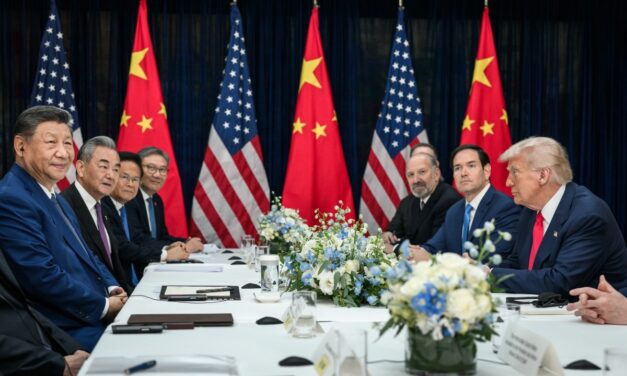
Diplomacy is an art and is best defined by its outcomes rather than by its processes. The most consequential outcome by far is the constraint of the power of one’s adversaries.
Read Issue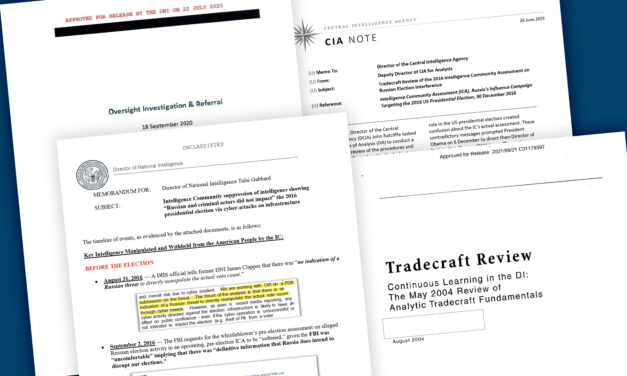
The Russia collusion hoax was anchored to two central claims: first, that Trump was a compromised agent of Russia, and second, that Russia interfered in the 2016 election to help Trump. The first claim was completely debunked after years of investigation. It is on the second and far more plausible claim—which was just as key to the hoax—that the newly released documents shed new light. And the revelations are shocking.
Read Issue
The EU brings benefits, but it does so by destroying national sovereignty. It seems to turn the countries it dominates into whimpering, simpering, dysfunctional shadows of the proud nations they once were.
Read Issue
When Alexander Hamilton became the nation’s first Secretary of the Treasury, he immediately began to prepare a schedule of tariffs, along with excise taxes on such commodities as alcohol and tobacco. The Constitution forbids taxing the exports of any state, and so American tariffs have always been laid only on imports.
Read Issue
American conservatism exists to serve the people and the nation through the Constitution. This includes defending them against enemies foreign and domestic. And the fact is, elite institutions have become the people’s and the nation’s enemies. They are openly waging cultural war on those they ostensibly serve. They cannot be negotiated with or accommodated. They must be defunded, disbanded, and disempowered. The rewards for doing so—for putting American families first again—will be greater than we can know.
Read Issue
CIA Recruiters no longer focus on the key psychological traits critical to success in the world of spying. They look at academic degrees, existing levels of language proficiency, and increasingly at things like skin color and sexual orientation. Training has been softened and is increasingly formbook in nature. We act as if anyone can be taught to conduct espionage—as if this is no longer an arcane craft to be practiced by a select group of unique people.
Read Issue
Some suggest today that America is behaving imperialistically—we do, after all, have some 600 military bases around the world. So it is worth recalling some historical examples of imperialism to understand what the idea entails.
Read Issue
There are reasons why the U.S. might want to project power into the Black Sea region. But we must not ignore that the politics of the region are extraordinarily complex and that the Ukraine conflict is full of paradoxes and optical illusions. And unless we learn to respect the complexity of the situation, we risk turning it into something more dangerous, both for Europeans and for ourselves.
Read Issue
If we don’t have open and honest elections, control of our borders, and equality before the law, then we don’t have the conditions for politics or free government.
Read Issue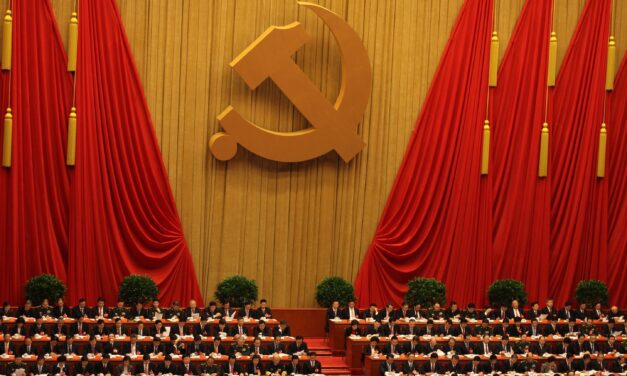
History will record that America’s China policy from the 1970s until recently was very costly because it involved a great deal of self-deception about the nature of the Chinese regime and the men who were running it.
Read Issue
Going forward, our best leaders will eschew political gamesmanship and work to control our borders, fix our public health agencies, and end our dependence on China and other foreign countries for goods that are essential to our national health and security. We must prepare ourselves to face the next pandemic without surrendering our way of life.
Read Issue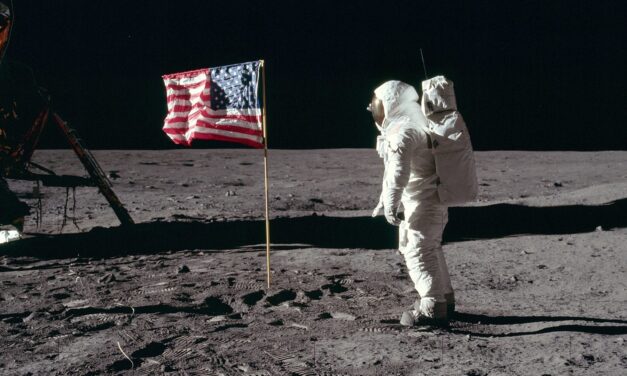
The reason for a space force is simple: space is the strategic high ground from which all future wars will be fought. If we do not master space, our nation will become indefensible.
Read Issue