Category: Economics

Tariffs in American History

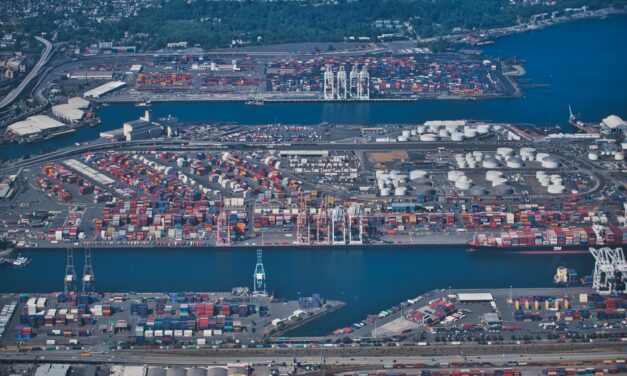
When Alexander Hamilton became the nation’s first Secretary of the Treasury, he immediately began to prepare a schedule of tariffs, along with excise taxes on such commodities as alcohol and tobacco. The Constitution forbids taxing the exports of any state, and so American tariffs have always been laid only on imports.

Read Issue
Sports Should Unify, Not Divide Us

I love sports. One of the main reasons I love it is that it celebrates and rewards achievement, not failure. Sports is the ultimate meritocracy. The best man or woman or team wins—at least until recently.

Read Issue

Thinking Smartly About Climate Change

The annual number of hurricanes that make landfall in the U.S. since 1900 is slightly declining, not increasing. The same is true for major hurricanes (category three and above) hitting the U.S. We see the same thing if we look at world data for total hurricane energy in the satellite era, 1980-2022. In fact, 2022 was the second lowest recorded year. Did you hear that reported anywhere? No, because it doesn’t fit the dominant narrative.

Read Issue

The Biden Economy and How It Could Be Fixed

Excess demand and low supply: this was the situation when Biden took office in 2021. And as any student of elementary economics knows, when demand exceeds supply you get inflation. Isn’t it pretty obvious what should be done in that situation? You should adopt policies that juice supply and avoid adopting policies that juice demand. Instead, the Biden administration proceeded to do the exact opposite.

Read Issue

America’s Broken Health Care: Diagnosis and Prescription

Prior to leaving office in 1961, President Eisenhower famously warned the nation about what he called the “military-industrial complex.” I suggest that we now have a medical-industrial complex that is sucking America’s wealth away from the other things that will make us healthier and create better lives for the American people.

Read Issue

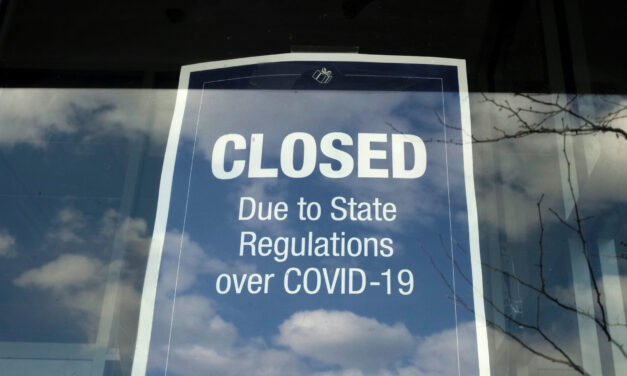
The Economic Disaster of the Pandemic Response

Economics is about people making choices and institutions enabling them to thrive. Public health is about the same thing. Driving a wedge between the two, as happened in 2020, ranks among the most catastrophic public policy decisions of our lifetimes. Health and economics both require the nonnegotiable called freedom. May we never again experiment with the near abolition of freedom in the cause of mitigating disease. 

Read Issue

Spiraling Violence in Chicago: Causes and Solutions

Murders nationwide in 2020 rose a stunning 29.4 percent over the previous year, the largest annual increase since the FBI began tracking that data in the 1960s. The number of murders in Chicago climbed even more sharply, rising 55 percent. It was as if a switch had been flipped. At least ten major U.S. cities hit new murder highs in 2021, but Chicago led the way with 797, the city’s highest number in 25 years.

Read Issue

Inflation in the United States

What causes the price of money to fall? The answer is very simple: an increase in the supply of money relative to other goods and services. As the Nobel Prize-winning economist Milton Friedman explained, “Inflation is always and everywhere a monetary phenomenon in the sense that it is and can be produced only by a more rapid increase in the quantity of money than in output.”

Read Issue

What Is the Great Reset?

The Great Reset promises inclusion in a shared destiny. But the subordination of so-called “netizens” implies economic and political disenfranchisement, a hyper-vigilance over self and others, and social isolation—or what Hannah Arendt called “organized loneliness”—on a global scale. This organized loneliness is already manifest in lockdowns, masking, social distancing, and the social exclusion of the unvaccinated.

Read Issue
Loading

A publication of
Hillsdale College

Over 7,500,000 Readers

Archived Imprimis Issues

Contributors